
Introduction: My First Curiosity About Matcha Tea
While exploring different types of tea, I kept seeing matcha everywhere — in cafes, desserts, and even health drinks. At first I assumed it was just another type of green tea, but after learning more, I realized matcha is prepared in a completely different way.
Unlike most teas where leaves are steeped and removed, matcha uses finely ground tea powder, meaning you actually drink the whole tea leaf. That small difference changes everything from taste to nutrition.
What Exactly Is Matcha Tea?
Matcha is a powdered green tea made from specially grown tea leaves. These leaves come from the same plant used for green tea, called Camellia sinensis, but they are cultivated and processed differently.
Before harvesting, the tea plants are shaded for several weeks, which increases chlorophyll and amino acid levels in the leaves. This is why matcha has its vibrant green color and unique flavor.
For botanical and historical information about matcha tea, you can explore:
https://en.wikipedia.org/wiki/Matcha
How Matcha Tea Is Made
What fascinated me most about matcha was its careful production process.
Step 1: Shading the Tea Plants
Tea plants are covered for about 3–4 weeks before harvesting to enhance flavor and color.
Step 2: Harvesting the Leaves
Young tea leaves are picked carefully.
Step 3: Removing Stems and Veins
The leaves are processed into a material called tencha, where stems and veins are removed.
Step 4: Stone Grinding
The dried leaves are slowly ground into a very fine powder using traditional stone mills.
This powder becomes the matcha used in drinks and recipes.
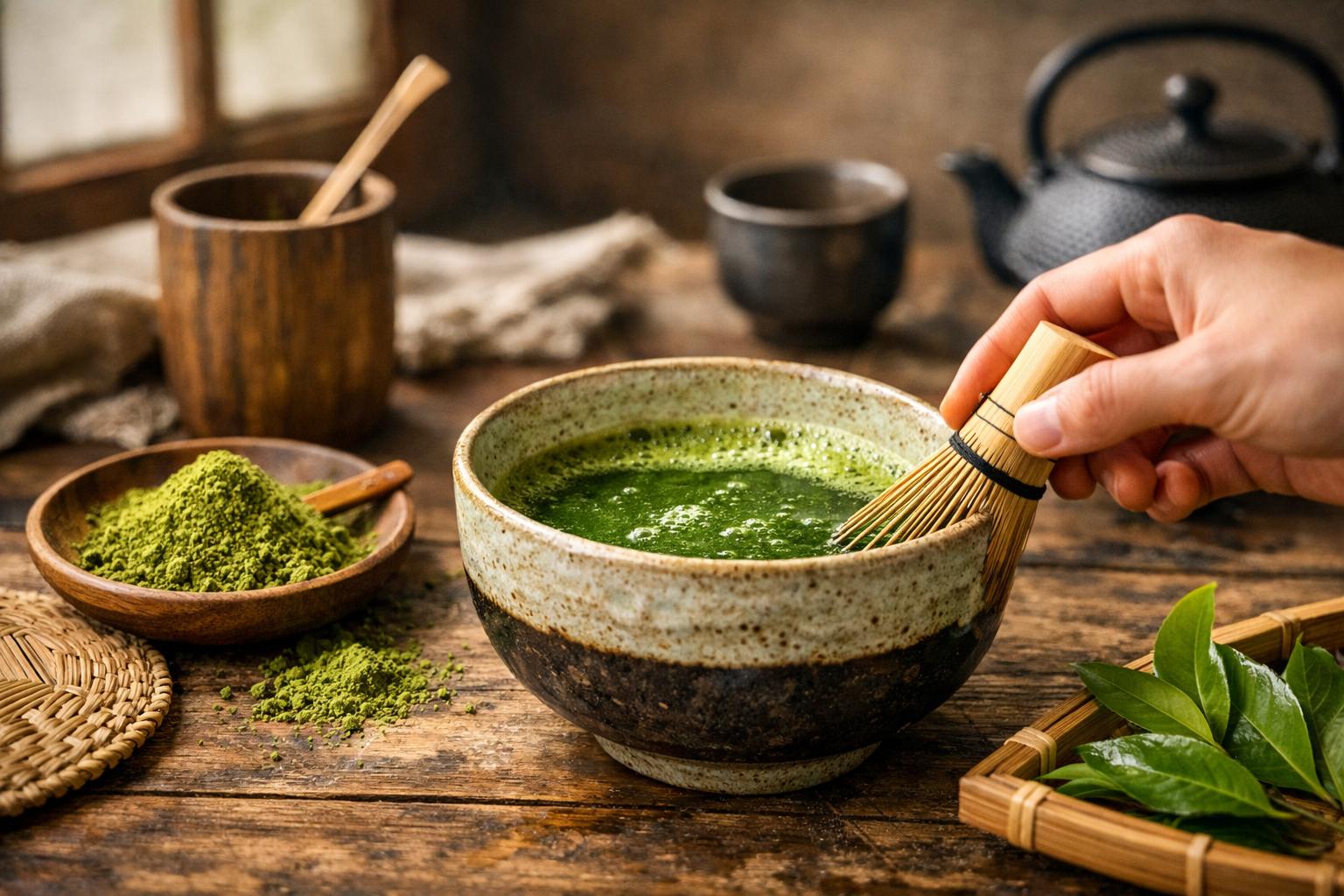
How Matcha Is Prepared for Drinking
Unlike other teas, matcha is not steeped.
Instead, the powder is mixed directly with hot water.
Typical preparation includes:
- Adding matcha powder to a bowl
- Pouring hot (not boiling) water
- Whisking with a bamboo whisk until foamy
Because the whole leaf is consumed, the flavor is richer and slightly earthy.
Components Found in Matcha Tea
Matcha contains several natural compounds, including:
- Catechins (antioxidants)
- L-theanine (amino acid)
- Natural caffeine
- Chlorophyll
These compounds are often studied for their potential health benefits.
Health research sources note that matcha contains high levels of antioxidants compared to regular green tea.
https://www.healthline.com/nutrition/7-benefits-of-matcha-tea
Matcha Tea Compared to Regular Green Tea
When comparing matcha with regular green tea, the main difference is how the tea is consumed.
Green tea is made by steeping leaves and removing them before drinking. If you want to understand how green tea itself is processed, you can read our guide on:
Green Tea Explained: How It’s Made and Its Benefits
(Internal link to your Green Tea blog)
Matcha, however, uses powdered leaves, which means the drink contains the full leaf nutrients.
Matcha is also often considered stronger in flavor compared to white tea, which you can learn about in:
White Tea Explained: The Most Delicate Tea Variety
(Internal link to your White Tea blog)
Why Matcha Became So Popular
From what I’ve learned, matcha gained global popularity for several reasons:
- Unique preparation style
- Rich and earthy taste
- Connection with Japanese tea ceremonies
- High antioxidant content
- Versatility in drinks and desserts
Today, matcha is used not only for tea but also in lattes, smoothies, and even baked goods.
Final Thoughts
Learning about matcha made me realize how diverse the world of tea really is. Even though it comes from the same plant as green tea, its cultivation, preparation, and drinking experience are completely different.
For anyone curious about tea or looking to explore something new, matcha offers a unique and fascinating tea experience.


 No products in the cart.