Black Tea vs Green Tea: Differences, Benefits, and Which One Is for You
For a long time I drank black tea in the morning and green tea in the afternoon without really thinking about why. It just felt right. But when I started exploring tea more seriously, I realised I had never actually compared the two properly. Same plant. Completely different experience. So I did the research, and here is everything I found.
They Come From the Same Plant — So What Makes Them Different?
This is the part that surprises most people. Both black tea and green tea come from the same plant — Camellia sinensis. The leaves are identical at the point of picking. What separates them entirely is what happens after harvesting.
Green tea leaves are heated almost immediately after picking — either by steaming or pan-firing — to stop oxidation. This keeps the leaves green, preserves the natural plant compounds, and results in a lighter, fresher flavour.
Black tea leaves, on the other hand, are left to oxidise fully. The leaves turn dark, the flavour becomes bold and malty, and the chemical composition changes significantly during the process.
One decision at one stage of production. Two completely different teas.
You can read more about how oxidation affects tea on Wikipedia: https://en.wikipedia.org/wiki/Tea_processing
Taste — The Most Obvious Difference
If you have tried both, you already know this. But it is worth putting into words clearly.
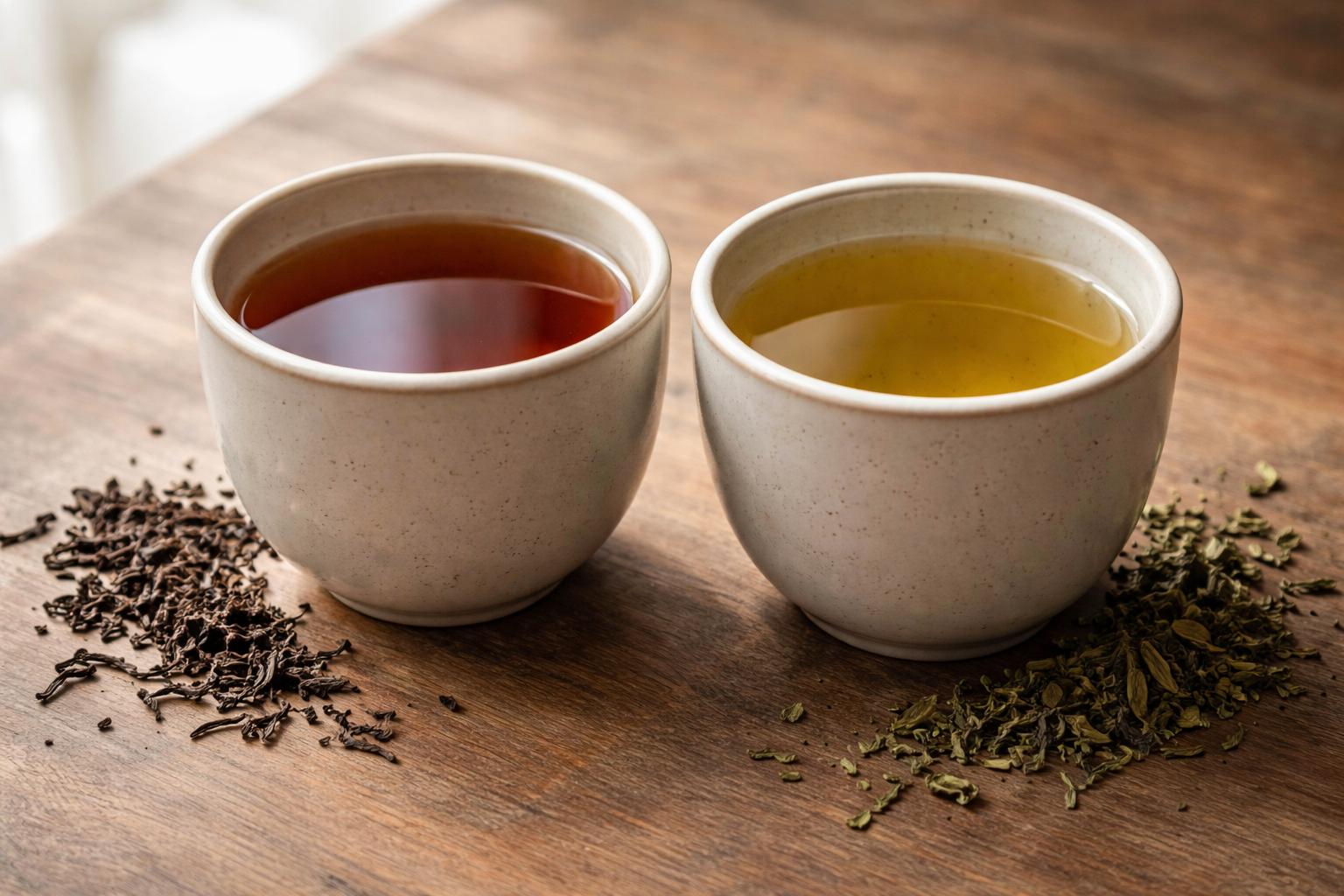
Black tea is bold, strong, and slightly malty. It has a natural depth that holds up well with milk or sugar. Some varieties have a slightly dry, brisk finish — especially Assam and Ceylon. It is the kind of tea that announces itself.
Green tea is lighter, softer, and often described as grassy or vegetal. Japanese green teas like Sencha tend to be smooth and clean, while Chinese varieties can be slightly nutty or floral. It is subtle in a way that rewards paying attention.
Neither is better. They are simply different experiences suited to different moments.
Caffeine — Which One Has More?
Black tea generally contains more caffeine than green tea, though both have significantly less than coffee.
A standard cup of black tea contains roughly 40 to 70mg of caffeine. A cup of green tea typically contains between 20 and 45mg. The exact amount varies depending on the variety, brewing time, and water temperature.
What makes green tea interesting from a caffeine perspective is that it also contains an amino acid called L-theanine, which promotes calm focus without the jitteriness that caffeine alone can sometimes cause. Many people find the energy from green tea feels cleaner and more sustained than black tea.
For anyone sensitive to caffeine or looking to reduce their intake, green tea is often the easier choice. For those who need a stronger morning boost, black tea tends to deliver more reliably.
Health Benefits — What Each Tea Offers
Both teas offer genuine health benefits, but in slightly different ways.
Green Tea is particularly valued for: Its high concentration of catechins — powerful antioxidants that are preserved because the leaves are not oxidised. These compounds are widely studied for their potential role in supporting metabolism, brain function, and overall cellular health. Matcha, which is powdered green tea, contains even higher concentrations of these compounds since you consume the whole leaf.
Black Tea is particularly valued for: Its theaflavins and thearubigins — antioxidants that are actually created during the oxidation process. These compounds are associated with heart health, gut health, and sustained mental alertness. Black tea also supports digestive health and has been linked to reduced LDL cholesterol levels in some studies.
According to Healthline, both teas contain beneficial plant compounds, but the specific types differ based on how each tea is processed: https://www.healthline.com/nutrition/green-tea-vs-black-tea
The honest answer is that both are good for you. The best one is the one you will actually drink consistently.
Brewing — How to Get the Best From Each
This is where most people go wrong with green tea especially.
Black Tea Water temperature: full boiling — 100°C Steeping time: 3 to 5 minutes Best enjoyed: with or without milk, with or without sugar Common mistake: not using hot enough water, which leads to a weak, flat cup
Green Tea Water temperature: 75 to 85°C — not boiling Steeping time: 2 to 3 minutes Best enjoyed: plain, without milk Common mistake: using boiling water, which makes green tea bitter and harsh
The single biggest upgrade most people can make to their green tea experience is lowering the water temperature. Let the kettle cool for two minutes after boiling, or use a temperature-controlled kettle if you drink green tea regularly.
Which One Should You Choose?
After comparing both properly, here is a simple way to think about it:
Choose Black Tea if you want a strong, energising morning cup, enjoy tea with milk, prefer bold and familiar flavours, or need higher caffeine to start the day.
Choose Green Tea if you want a lighter, cleaner drink, prefer drinking tea plain, are focused on antioxidant intake, or are sensitive to strong caffeine.
Choose Both if you want variety. Many tea lovers — myself included — drink black tea in the morning and switch to green tea later in the day. There is no rule that says you have to pick one.
Want to Explore Each Tea in More Detail?
If you want a deeper understanding of each tea individually, we have dedicated guides for both:
Black Tea: How It Is Made, What It Contains, and Its Benefits
Green Tea Explained: How It Is Made, What It Contains, and Its Benefits
And if you are just starting to explore different tea types, our Complete Guide to All Types of Tea https://tappertea.com/blog/ covers everything from herbal teas to matcha in one place.
Final Thoughts
Black tea and green tea are not rivals — they are two different answers to the same question. The question is simply what you need from your cup right now. Some days call for the strength of black tea. Others call for the calm clarity of green tea. Understanding both means you always have the right option ready.


